Monday, September 28, 2015

Week5-Adolescence-Journet

1              In Chapter 8 we learn about the adolescence which is usually marked by the onset of puberty.  In girls, menstruation marks the start of Adolescence.  In boys the first ejaculation usually signifies adolescence.  Although the ages can be different for everyone, the average age when in which these major transitions happen for girls is 11 years old and boys is 12 years old.  Major physical changes in girls are broader hips and boys develop broader shoulders.( Fiore2011)  What I found very confusing was that in the late 1700's and early 1800's the average age that girls first began menstruating was 17 years old.  I wondered what external factors could be contributed to this.  Could it be that back in the period food was more organic and less processed.  Their may have been less exposure to pollution.  The chapter also talked about the correlation between obesity and an earlier age of menarche.
   

               Parents are usually razzed about watching out for when their kids become teens because of attitudes and emotional behaviors.  My 3 children currently fall within the age range of adolescence.  I have an 11 year old daughter, 13 year old son, and my oldest daughter is 15.  I do notice their preoccupation with image and better self care with respects to hygiene.  They are all involved in sports.  As a parents I was a bit relieved to see that teens involved in sports are less likely to get involved in risk taking behaviors and also less likely to be sexually active.  Of course there are other factors that increase the chances of an adolescent doing risk taking behaviors.  Statistics show that factors like uninvolved parents and teens that come from a low socioeconomic household are most likely to become involved in drugs, alcoholism and sex.  
    
                Teens go through so many transitions and it is a time that is very critical to finding their identity.   I really enjoyed reading James Marcia's Identity Statuses.  He states that there are 4 Identity Statuses that determine where someone is in regards to attaining mature identity which involves crisis and commitment.  I strongly agree with his ideas on Identity Statuses.

               * Identity Confusion: No crisis has been experienced and no commitments have been made.
               * Identity foreclosure: No crisis has been experienced but commitments have been made,                       usually forced on the person by the parent or society.
               *Identity Moratorium: A number of crises have been experienced, but no commitments are                     made.
.                * Identity Achievement: Numerous crises have been experienced and resolved.  Permanent 
             commitments have been made.: (Fiore 2011)                       

          Piaget describes this period as the Formal operational stage (11 years or higher) where thinking is more abstractly, logical reasoning takes place along with hypothetical thinking and the combination of groups of concrete operations are happening as well.  


Sunday, September 20, 2015

Week4-Early & Middle Childhood-Journet

  Chapter 6 talks about the "Magical Years" of early childhood.  Kids ages 2 to 6 are perfecting gross motor skills such as running,stairs,jumping,hopping, skipping, pedaling, balancing, carrying bundles, rope jumping and much more.  During these activities they are using the larger muscles of their bodies.  They are also developing other skills using small muscles which is know as their fine motor skills.  These involve throwing, kicking a ball, scribbling, turning pages, holding a pencil, dressing, eating neater, using scissors, shoe tieing and using eating utensils among other skills.  Lateralization is being established and a child begins to exhibit a preference for either the left or the right hand.  I found it very interesting that a child's body size not only is influenced by their genes but by their socioeconomic status.  They attribute this to nutrition, sleep and recreation.  Those with limited resources may not be well nourished leading to a smaller body size.  

This year I am blessed to work with preschoolers in a blended pre-k program and it is remarkable to see such eager little faces that are excited about learning.  For most of the students it is their first schooling experience.  They are learning so much like walking up and down the stairs.  The range of developed or undeveloped skills between them is very broad.  For instance we have students that may already know how to write their name and on the other hand we might have a child that has never held a pencil before.  While I was reading this chapter I was really able to make many connections.  

At this age they are in Piaget's preoperational period at this stage the explore and learn about their environment through play.  We learned about the different types of early childhood programs like Montessori, Reggio Emilia Schools and the Head Start Program.  Most of the programs have similarities in the way that they were designed.  They focus on the importance of learning through play.  They are set up with different centers that have block play, art, sand/water, dramatic play etc. Through play children are developing cognitively, socially and emotionally.


In Chapter 7 we learn about the middle Childhood where kids are ages of 5-12.  By the age of 8 or 9 the brain size has grown to its full size.  There are many synapses going on as they become better at problem solving, their memory improves, more attentive,  and they develop better judgement.   They are very energetic and have fine tuned the gross and motor skills.  Since the body is preparing for the growth spurt of adolescents in this chapter it is recommended that parents establish healthy eating patterns which will decrease the risk of obesity and diseases related to obesity.  During this age some kids may face other challenges such as being diagnosed with a learning disability.  

Piaget's concrete operational stage talks about cognitive achievements in this age group. In conservation children understand that two the amount of water stays the same even if it is poured in a taller glass.  They also can group objects in diferent categories.  In seriation kids can group objects based on length or weight.

I really liked Gardner's Multiple intelligence and that is why I attached Albert Eintein's Fish quote.  I believe we all have different types of intelligence and we cannot measure each other based on one intelligence.   I took a survey earlier this year and to see what type of intelligence I have.  It was a close tie between interpersonal and spatial intelligence.  People with interpersonal Intelligence become teachers, therapist, actors. As it turns out im currently studying to be a teacher.

In this chapter Moral Development was introduced in this chapter.  Piaget says that before the age of 4, children are not worried about morals.  After age 4 kids start making decisions based on right or wrong.  Between the ages of 7-11 kids realize that because rules were made by people they can be changed.

I loved learning about Resilient Children,  Three things they have in common are that they are considered to have good temperaments in turn people are nicer or positive towards them.  They also have special interest or talents.  The third thing they have in common is that they have sufficient intelligence to to acquire good problem solving skills. Resilient children have rough lives or may have gone through crises but the manage to come out and continue developing in a healthy manner despite the trauma they have been through,  I believe that I fall under this category of a resilient child/adult.  I believe that my faith in God and in good people has attributed to my resilience.

Sunday, September 13, 2015

Week3-Conception through Infancy-Journet

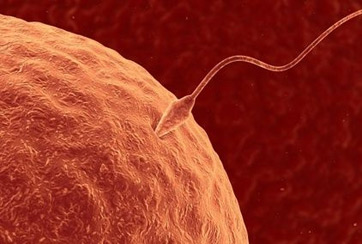
While reading the three chapters about conception through infancy, I thought I was an expert because I already have three children of my own.  There was a lot of material that I did find very interesting.  Although I have read most of this before and have personally experienced it, I realized that it is not an easy process to go from conception through through infancy.  I personally had no complications with pregnancy or births and I'm blessed to have had three healthy children.  So my perception of the whole thing is that it was easy.  In reading the first chapter, I was surprised that a male ejaculation produces about 100 to 250 billion sperm but only about 200 make it up the Fallopian tubes(FioreChapter1).  The conditions must be perfect for fertilization.  Many fertilized eggs may self terminate if things are not right..  Environmental factors also play a roll in the prenatal period.  Assuming that everything goes well during pregnancy the mom will start the labor and delivery.

         We read in chapter 4 about the process of birth.  Once again thinking back to my personal experiences,   My labor and deliveries were rather simple and epidural free.  Within 3-4 hours of arriving at the hospital I delivered 3 healthy babies separately.  The book explains about the complications that may occur during labor and delivery such as a baby in breech position or the umbilical cord wrapped around the babies neck.  Complications may also also affect the mom such as fever or infections.  A women at risk of complications make deliver her baby through cesarean section to minimize any danger to her baby or herself.  Every new parents wish is that there baby is born healthy.  Unfortunately, genes and environmental factor may cause a baby to be born with a disorder such as spinabifida or downs syndrome just to name a few.  Some disorders  maybe evident at birth and some may not be evident until past infancy stage like autism or develop much later into adulthood.  After delivery many woman are affected by postpartum blues and some are hit a little heavier with postpartum depression.  It takes a lot of adjusting to a new baby and also a woman's body is still going through a lot of changes.

         In Chapter 5 we learn about the Infancy Stage which is from birth to age 2.  It talks about how babies are born with natural reflexes such as sucking which is crucial for eating and survival.  Infants are measured using milestones to make sure the are growing healthy.  Some of these milestones include lifting their heads, rolling over and crawling.  They explain the process of language acquisition and Vygotskys 3 stage of language development.  I have witnessed many infants and toddlers in these stages.  In cognitive development we read about Piagets sensorimotor stage and   Information processing in infancy. I was very interested to read about attachment and the challenges of attachment during infancy.  It talks about how important it is for an infant to form a secure and warm attachment with mom.  It made me think back to when I was about 2 years old, although I don't remember, my mom told me about when she sent my brother and I to Mexico.  She was a single mom who just found a job and wanted to earn money to rent an apartment for us three.  She sent us to Mexico where we were cared for by our aunts.  We were there 4 months.  My aunts later told me that I cried a lot.  My mom told us about our return to Chicago and our new apartment.  I believe I had just turned.  My mom was so excited to be reunited with us.  We were home and she remembers my brother crying and telling her that he wanted his mom.  It broke her heart to hear that.  I'm sure it affected us in some way.  Two youngsters leaving their mom and having to depend on strangers in Mexico.  I'm sure we established a bond and then we were sent back to Chicago to go through it all over again.  


Monday, August 31, 2015

Week 2 / Theories Of Development /Journet


   In Chapter 2 we are introduced to the many theories of development.  One theory that is considered to be the foundation  of many other theories is Sigmund Freud's Psychoanalytic Theory.  This theory has five stages of development and they are based on wants or needs.  Each stage is named after a pleasure center and is assigned to an age range.(Life Smart 30)
  1.             The Oral Stage(0 to 1.5 years) goal to obtain a certain amount of sucking, eating and biting
  2.             The Anal Stage (1.5 to 3 years) goal to successfully potty train
  3.             The Phallic Stage (3 to 5 years ) goal to develop healthy sexual interest
  4.             The Latency Stage (5 to 12 years) goal to develop physical, intellectual and social skills              while sexual desire is dormant 
  5.             The Genital Stage (12 years and older) Surge of sexual hormones occur.  People look to               establish relationships outside of their immediate family
       This theory is based on wants or needs and if they aren't met aspects of the individual remain in that stage preventing him or her from fully maturing. This theory may lose popularity among some people because it focuses on the sexual instinct of people and it stops at the age of 12.  It implies that people 12 through 99 remain at the Genital Stage.
    
     In my opinion I like the way Erik Erikson Psychosocial Theory is set up.  It has 8 stages that go beyond age 12.  This implies that development continues even at a later age.  This Theory focuses on the impact of social experiences.  Each stage is marked by a life crisis that must be resolved in order to move on. (Life Smart 32).
   
                                            Age                 Stage                       Psychosocial Crisis
      1.              0-2                  Infancy                    Basic Trust Vs. Mistrust
      2.               2-3                 Early childhood       Autonomy Vs. Shame & Doubt
      3.               3-5                 Childhood                Initiative Vs. Guilt
      4.               5-12               Middle Childhood        Industry Vs.Inferiority
      5.               12-18             Adolescence             Identity Vs. Identity Confusion
      6.                18-25            Young Adult            Intimacy Vs. Isolation
      7.                 25-65            Middle Age             Generativity Vs. Stagnation
      8.                65 +              Old Age                  Integrity Vs. Despair       
I can relate to this theory a little better.  I wonder can someone be older in life say 40 years old and still be in Psychosocial Crisis of Identity Vs. Identity Confusion (12-18)  or Intimacy Vs. Isolation (18-25).  In my opinion some may take longer than others to get through a  specific life crisis.
    
    I also enjoyed reading and strongly agree with Maslow's Hierarchy of needs.  There are 5 stages of needs being met and utilized.  I'm hoping the percentage is greater than 2 percent when it comes to the individuals that reach the Self Actualization Stage.  I have seen individuals that get stuck in the first stage where life consists of meeting their most basic of needs like food and shelter. I wonder if it is possible to go though this hierarchy of needs while being able to skip a need like Love.  Can you meet basic needs, feel safe,  not be in love or really connected to some one yet feel good about yourself and reach the point of Self actualization.  Does Love include self Love?  I'm just thinking out loud.  I feel that I may be in the 3rd or 4th stage of this pyramid and hope to reach the point of Self Actualization in my lifetime.


Wednesday, August 26, 2015

Week 1- Journet

 In Chapter 1: Life Span Development, we read about lifespan development which refers to an examination of the biological,cognitive/psychological and social changes that happen over the course of a human life.  Development being the process of changing and the changes that happen through the lifespan.  We as humans go through similar stages in life. Those stages are as follow: The Prenatal Period (Conception to Birth), Infancy  ( birth-age 2), Early Childhood (ages 3-6), Middle Childhood (ages 7-11), Adolescence (puberty:ages 12-18), Early Adulthood (19-34), Middle Adulthood (ages 35-64) and Late Adulthood (65 and over).   Although we all go through these periods in our life, we can agree that we are all very different.  We may have things in common or not much in common at all.  Why is that?  Well it is a combination of things.  Nature (our innate being) and Nurture(our environment) have a huge influence on who we become.  Our culture has a major influence, our faith, our gender, and many more factors play a role in who we are, how we perceive the world and how we react to it.  Chapter one calls all these factors Biopsychosocial Interactions which is the influence of genetic, biological, psychological, and social/environmental factors and processes.  

While I read some of my classmates "getting to know each other" posts.  It is very evident that all have diverse backgrounds. We all currently have this class in common.  Some of us are going into teaching, We may have other similarities like sports or cooking and perhaps Faith.  However, we all went through so many differences in our life to get to this point.  Some went through normal deliveries at birth and perhaps some of us went through a hard or complicated birth.  Our child hood may have been a happy one or a dreadful one.  We may come from single parent homes or a huge extended family.   Our genes may be healthy or may carry inherited diseases.  High school may have been a breeze for some of us or maybe some of us wish to forget that period in our life.  Some of us are married or single by choice or by life events.  Some of us have children and some of us still feel like children.  I can go on and on about all the factors and interactions that we have gone through that have shape who we are today.  This is how I understood the The Biopsychosocial Model on page 13 in our LifeSmart Book.

I also understood that not everyone who has gone through tough times in their past especially in childhood is a "bad apple".  In other words because someone has lived in poverty,lacked resources, or grew up in a violent environment, this does not necessarily mean that this person is destined for a tough adulthood as well.  Yes, I know statistics show the correlations between a negative childhood and a negative adulthood.  However, Resiliency is powerful and you may have an individual that will overcome the negative factors and knock down the stereotypes and step all over those statistics to achieve great things in life. 

 Examples:  Helen Keller (became deaf /blind by age 2) went on to receive her Bachelors degree from Radcliff College and gave many speeches lobbying for equality, women's rights and disabled students among other things,  Richard Branson (dyslexia) developed Virgin Records. Oprah Winfrey (was repeatedly sexually abused) is now one of the most famous and wealthiest woman on Earth.  

On the opposite end, You can have an individual who grew up in the lap of luxury, came from a "good home" , had an overflow of resources, a nuclear family dynamic with loving parents. Everything pointed to the fact that this person will do great things in life and who knows they end up abusing drugs or killing people.  People are left scratching their heads of what may have gone wrong with this person.

Examples: Robert Bale (good kid, upbringing seemed good) pleaded guilty to murdering 16 civilians in Afghanistan while he was enlisted in the Army)
Ted Kaczynski- was considered a math prodigy, skipped 2 grades in school, attended Harvard at 16 and graduated.  We now now him as the Unibomber, He plead guilty to 13 federal bombings that killed 3 people and wounded 23.

There is no specific mold that determines who becomes good, bad, or normal as an adult.  However, the biopsychosocial interactions and processes do have a major influences on our individual human development.